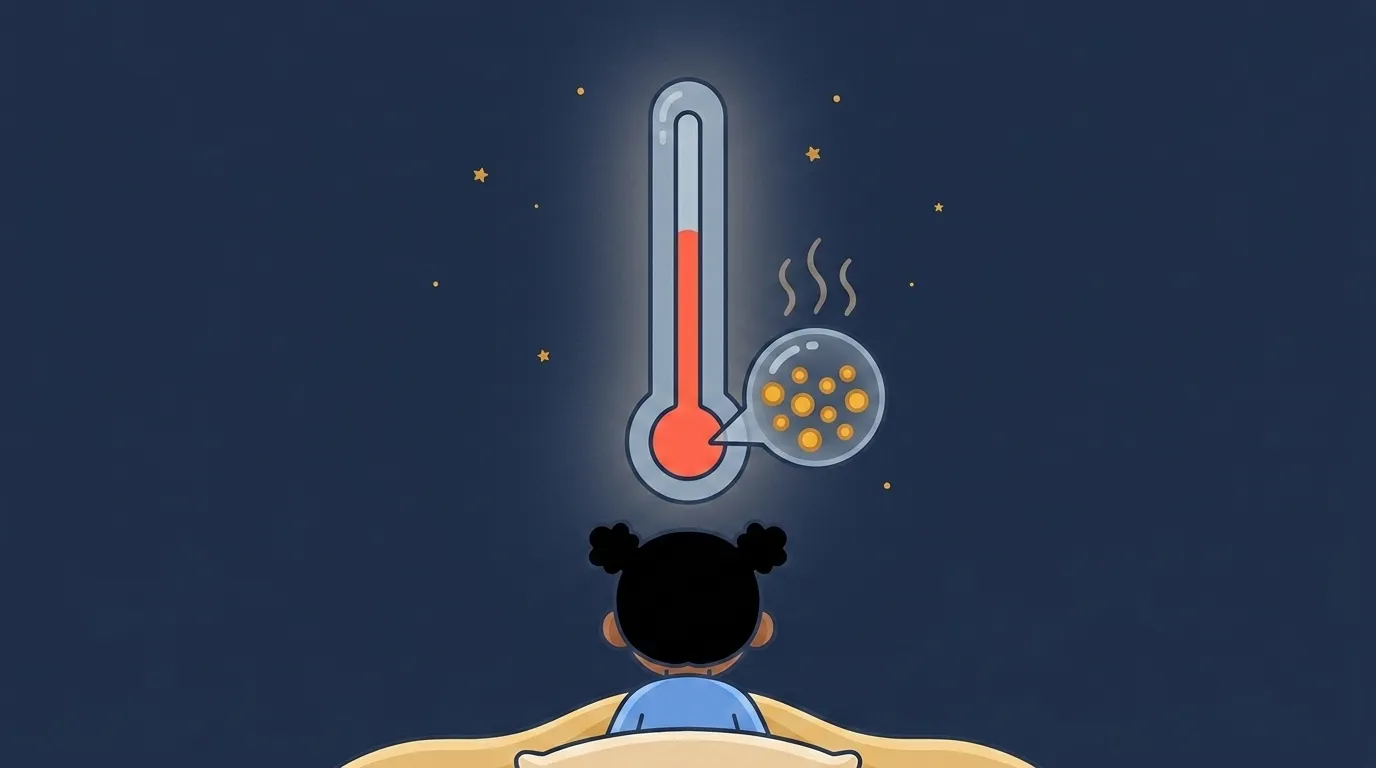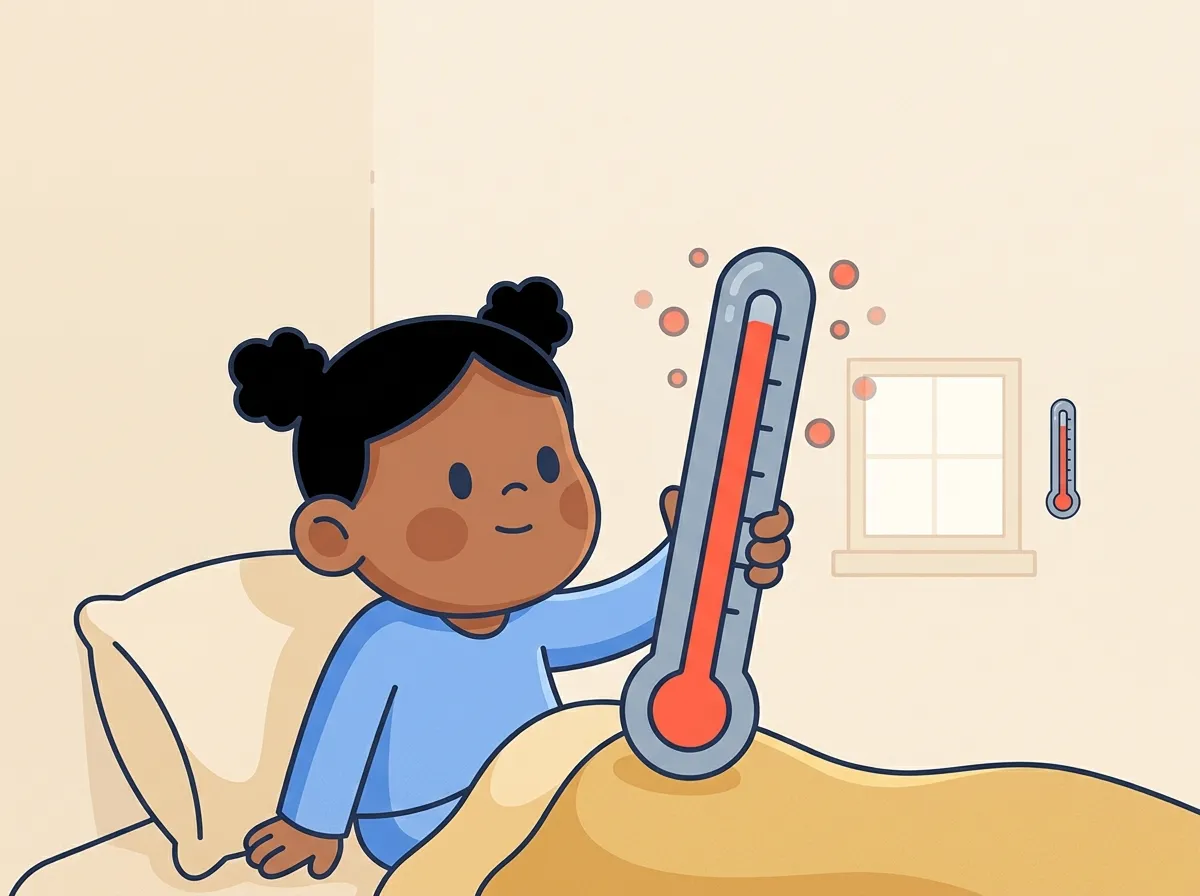
Everything is built from bits far too tiny to see — and they never stop jiggling. Warm them up and they jiggle harder, bumping and shoving for more room.
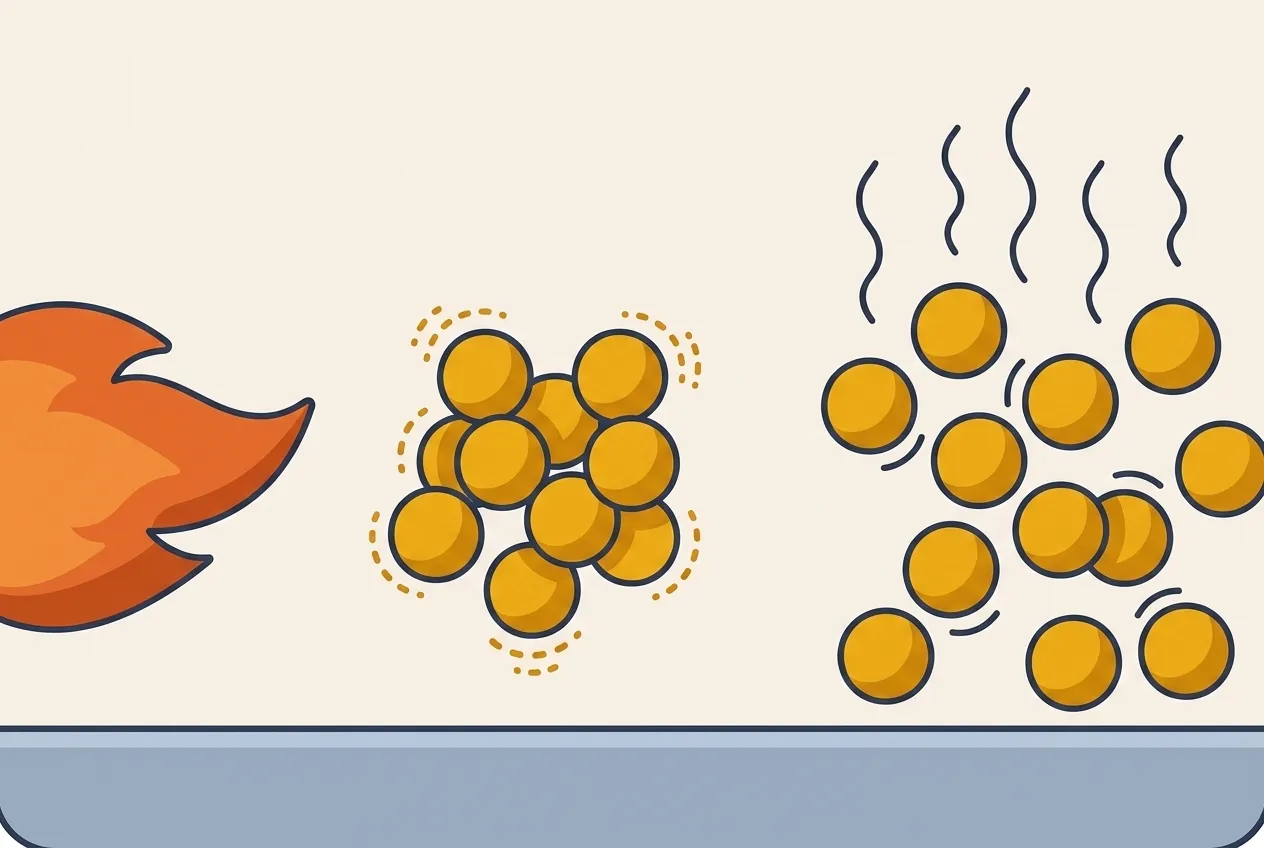
Tap the flame. Watch the bits jiggle faster — and the whole crowd spread out to make room.
A thermometer keeps most of its red liquid in a fat bulb, then gives it one skinny escape tube. The same tiny swell becomes a long climb you can see.
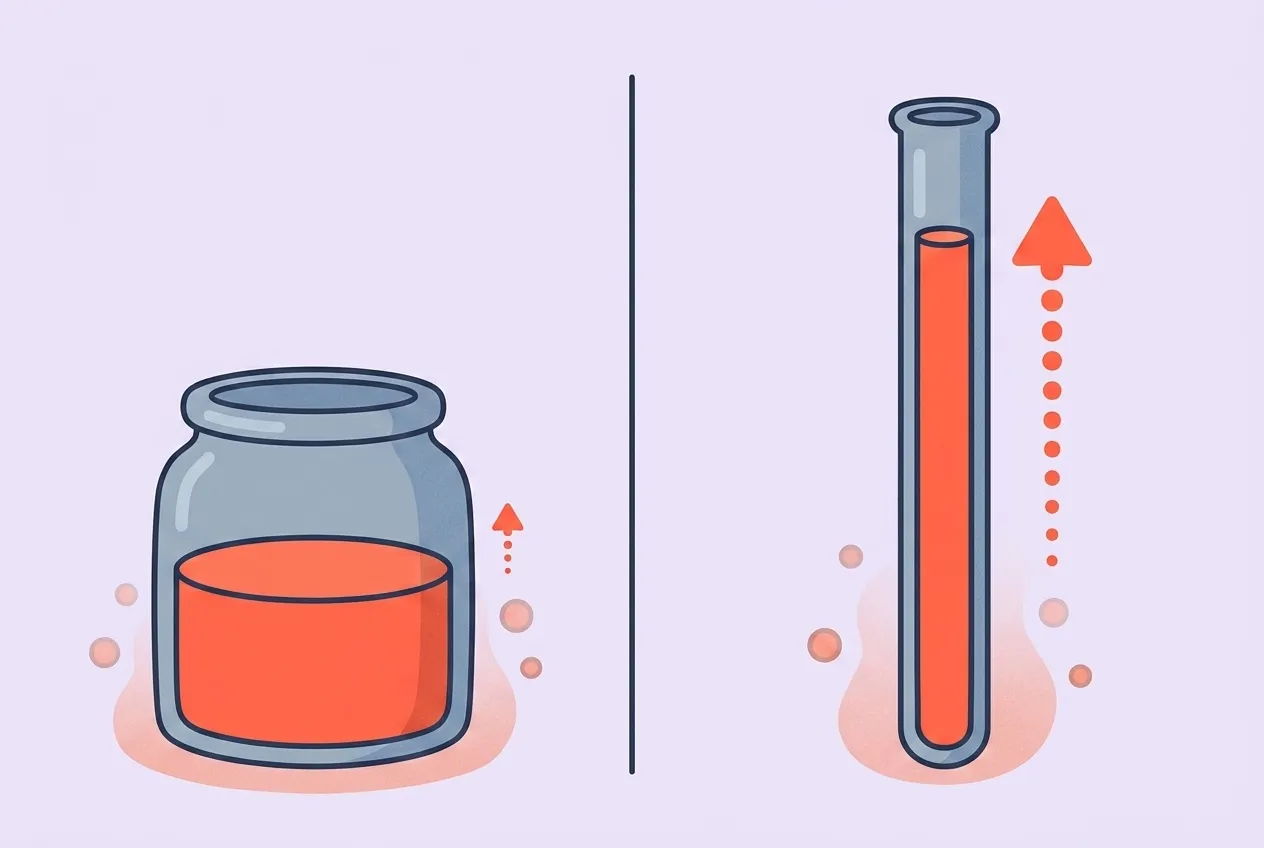
Warm them both the same. The fat jar barely twitches. The skinny tube shoots up — a narrow tube is a magnifier.
Same swell inside — a way bigger climb up the skinny tube.
Now the real thing. Slide from icy to hot and watch the red climb the scale — the bits inside jiggle to match.
Warm bits spread out, so the red line rises up the scale.
Now a timing test…
The thermometer has rested in this room-warm air. Lower it slowly, bulb-first. There is still a gap — nothing has touched the ICE yet.
The thermometer starts above the ice and moves down slowly.
As you lower it, when will the red line start changing?
Lower it slowly and watch the bulb and line 🧊