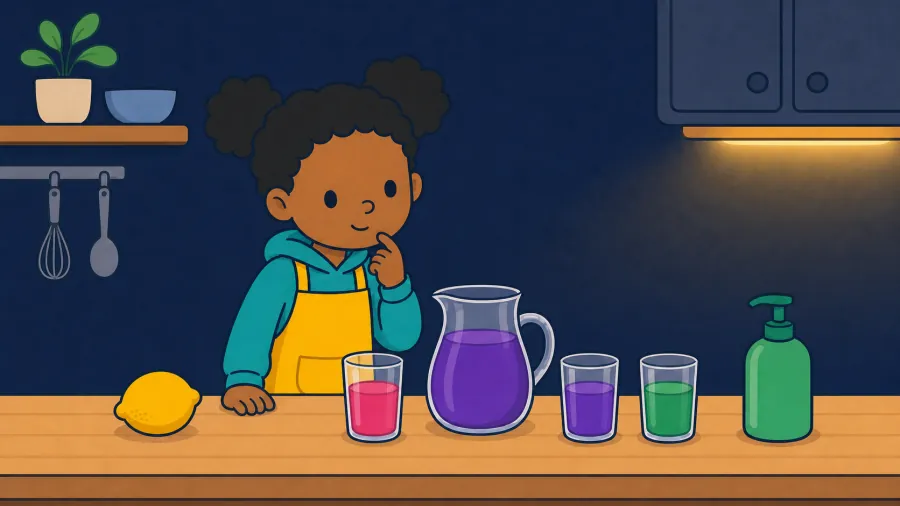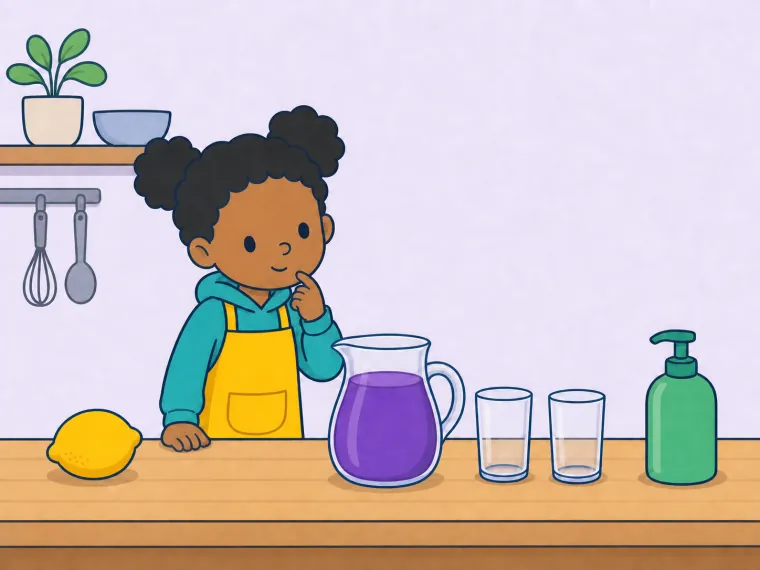
How can one purple juice turn pink in lemon and green in soap?
The two test liquids look clear, yet the same cabbage juice answers them differently. Tap the table, then follow the color clue.
One pigment leaves the cabbage
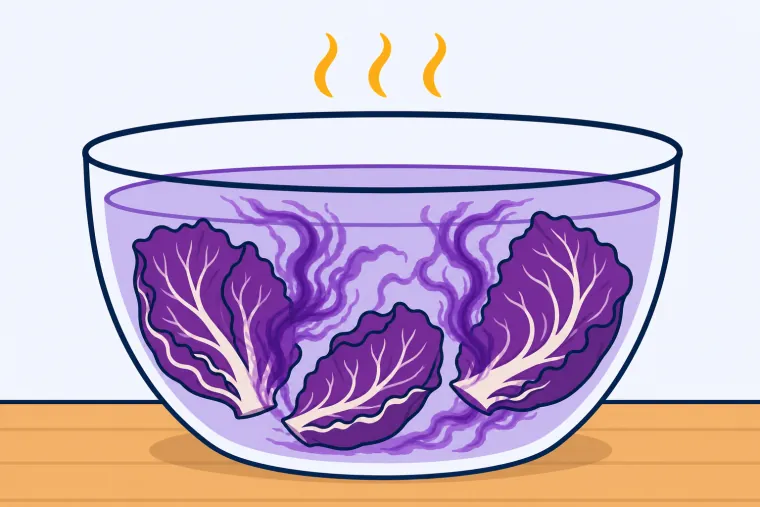
Warm water pulls anthocyanin pigment from the leaves. That one color-maker travels into every test cup.
The same pigment can change form
The surrounding liquid can add tiny H+ pieces or pull them away. The same pigment bends into another form; no new dye appears.
A new form lets different light reach you
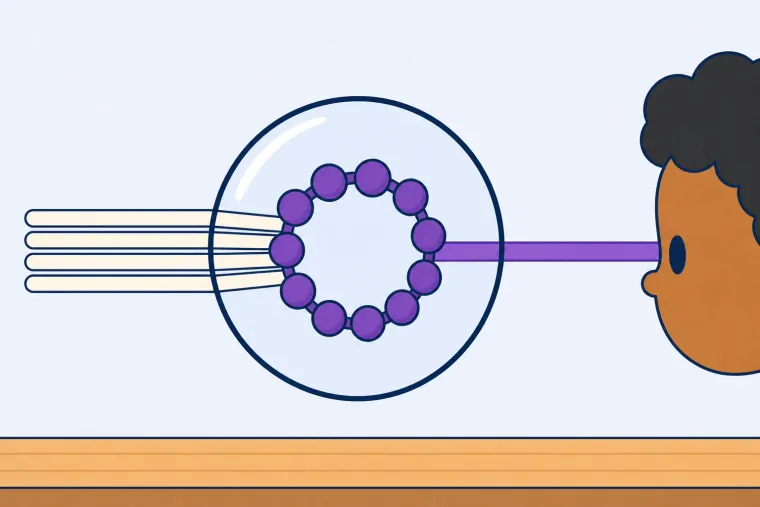
White light hits the pigment. Its form absorbs some colors and lets another reach your eye. That light is the color you see.
Same purple start, different surroundings
Fresh purple is the middle. Lemon raises H+ toward pink. Soap lowers H+ toward green. Each goes into a separate cup.
What if lemon arrives second?
Soap has already turned this cabbage sample green. Lemon is about to drip in. Does the detector remember, jump, or respond step by step?
Commit before the lemon enters.
What route will the green cup take as enough lemon is added?
Add lemon slowly and watch the balance cross the middle.