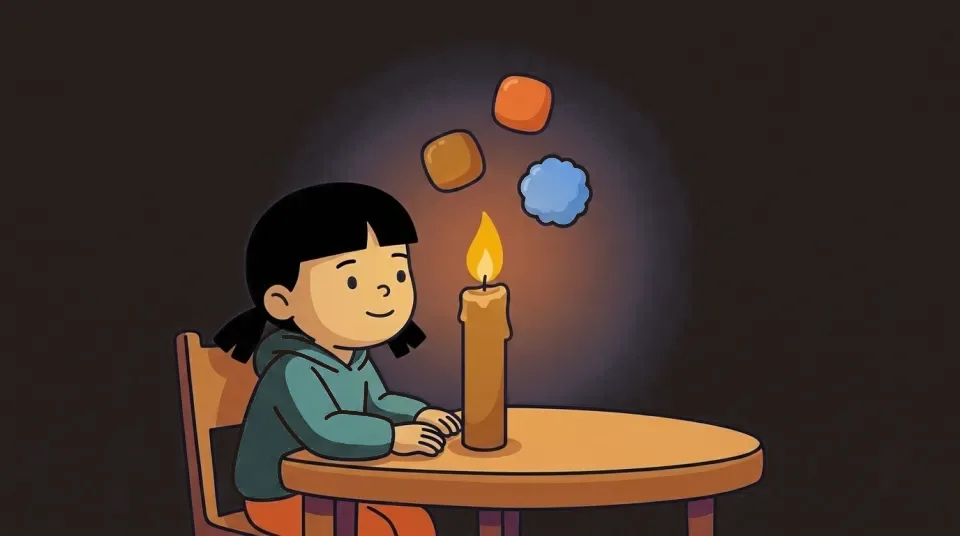
A flame isn't a thing sitting there. It's fuel and a gas from the air crashing together — and that crash makes the heat and light. Stop feeding it and there's nothing left to burn.
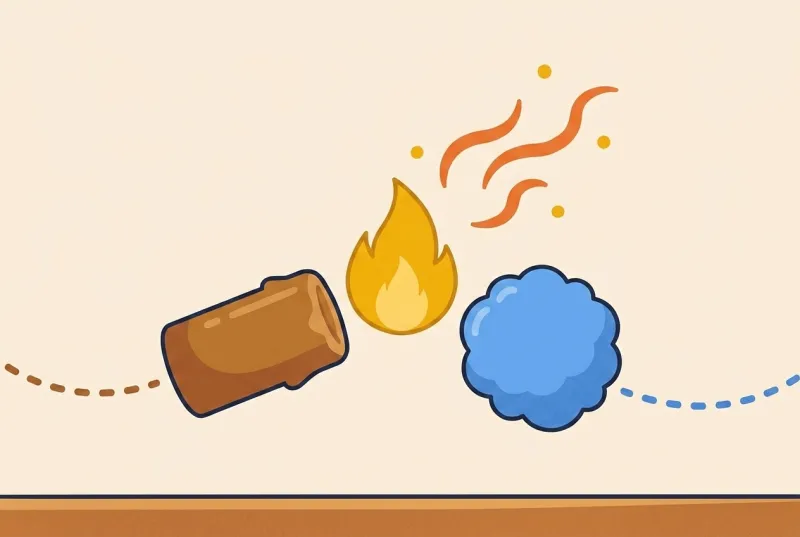
The gas it eats is oxygen — only about one in five bits of the air. The flame gulps it up, so it needs fresh air arriving all the time. Tap the air to find it.
A fire needs three things all at once — fuel, heat (a match starts it, then it stays hot as it burns), and oxygen. Picture them as a triangle. Take away any one corner and the flame falls apart.
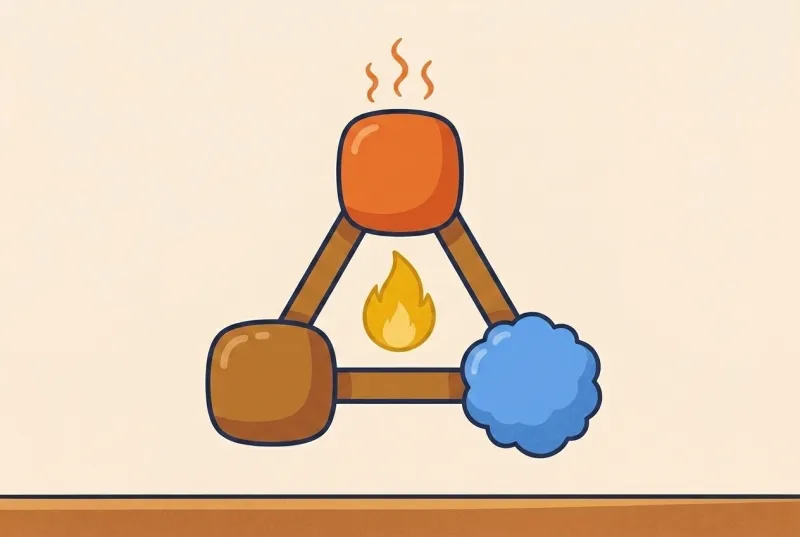
Your turn — feed the flame. A fire is only as strong as its weakest supply. Turn any single tap down and watch.
Big, healthy flame
Now the big test.
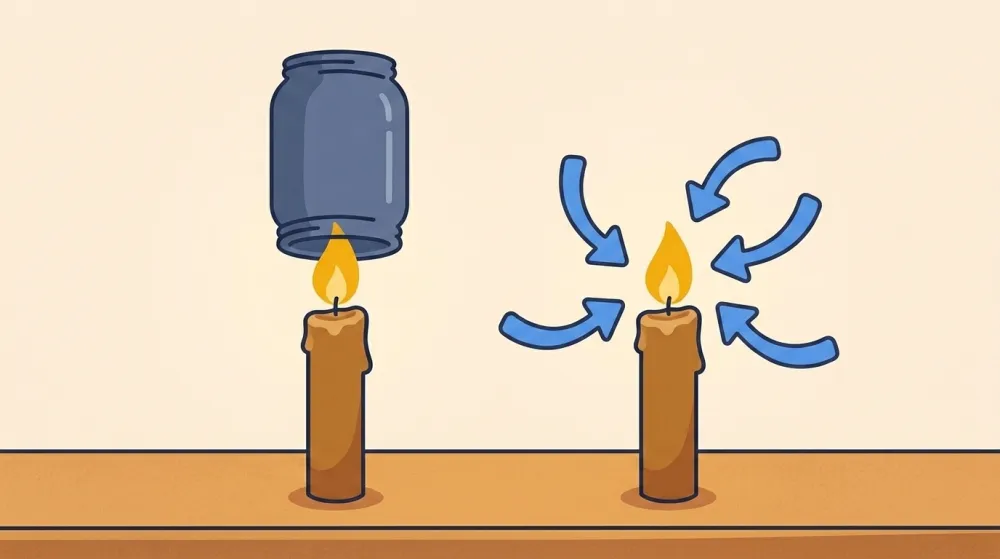
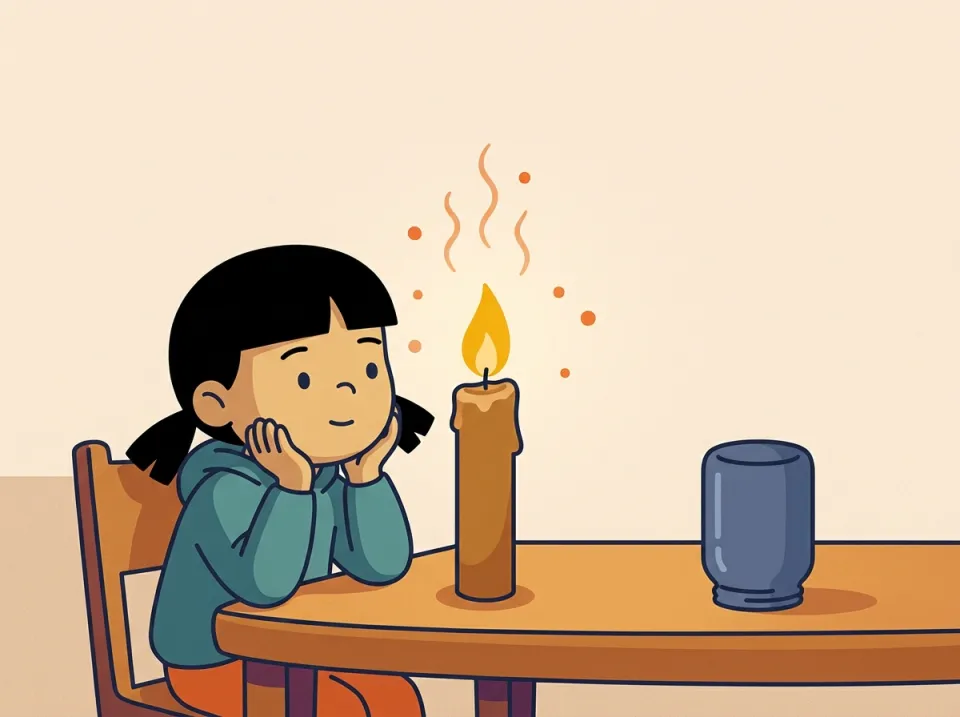
A glass jar is ready to cover the left candle. Imagine lowering it until its rim seals against the table. The other candle stays in the open. What happens in the first moments after sealing?
The jar has just sealed. It contains the air that was inside a moment ago.
What happens just after the jar seals?
Seal the jar, then advance the model time