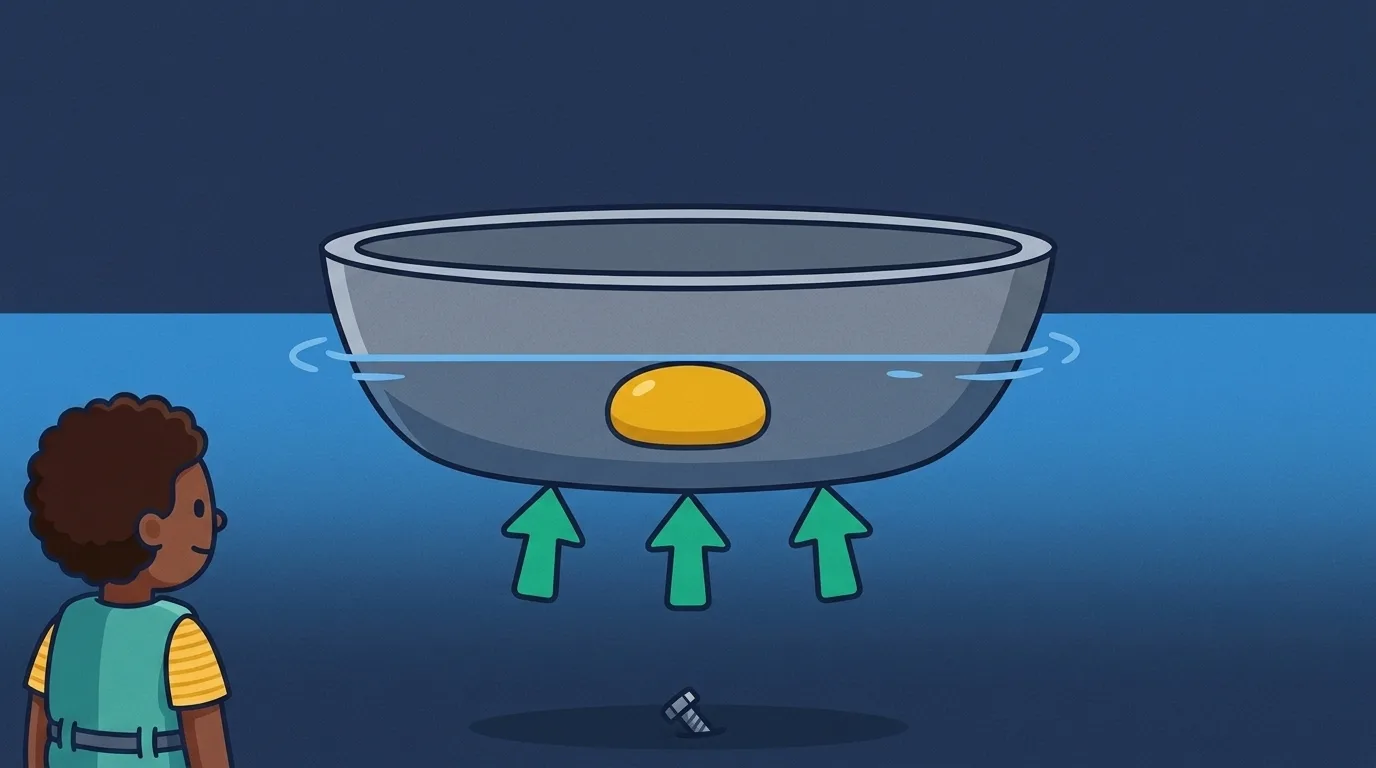
First clue: shove anything down into water and the water shoves back UP on it. Ever tried holding a beach ball under? You can feel it fight to rise.
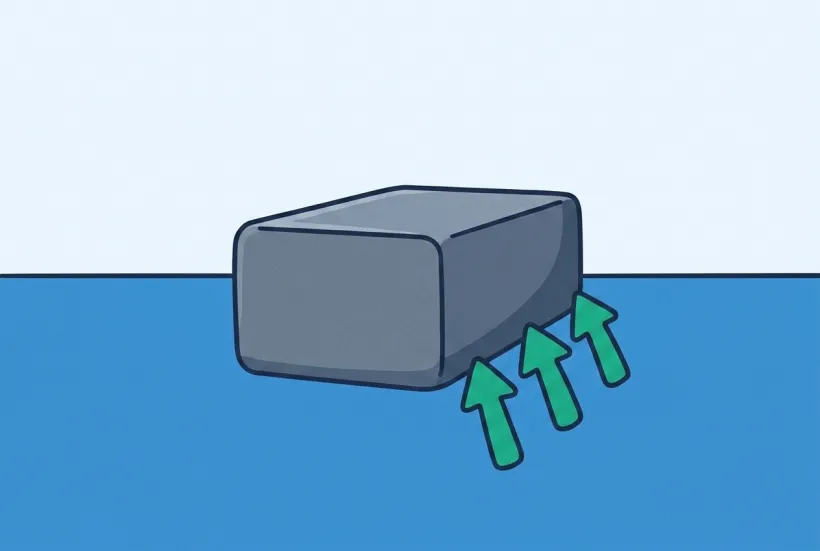
And here's the trick: the more water a shape shoves aside, the harder the water pushes back. Tap to push this sealed, air-filled box under and watch.
Compare sealed boxes held at the same depth. A wider box encloses more space and pushes aside more water. Try changing its width.
More enclosed space underwater → more displaced water → bigger up-push.
Now take ONE lump of steel. Tap to reshape it: squeezed into a tight ball, or spread into a hollow boat wrapping a pocket of air. Same steel, same weight.
Line them up over the water.
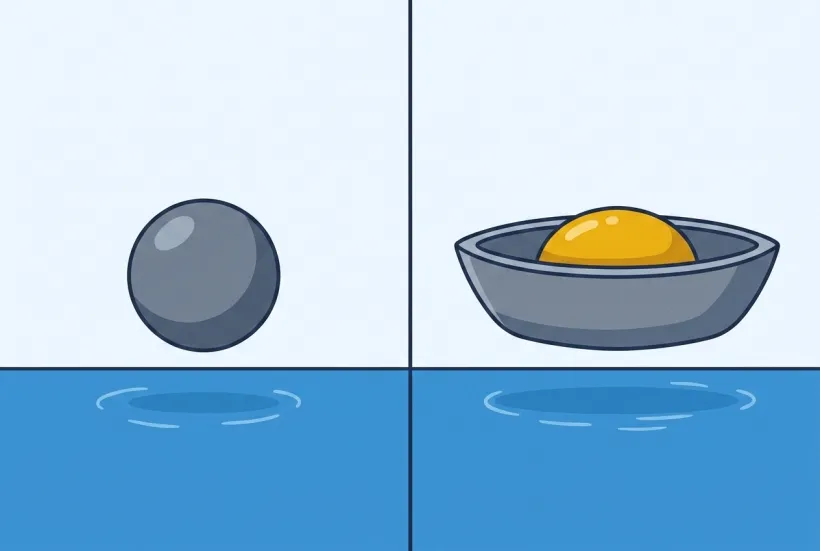
The hollow boat wraps a pocket of air. Keep its shape fixed for a new test: what changes if water fills that pocket? 🤔
You just saw: a wider shape shoves aside more water, so water pushes back harder.
The hollow boat is floating. A leak lets water fill its air pocket. Without changing the steel or the outside shape, what happens?
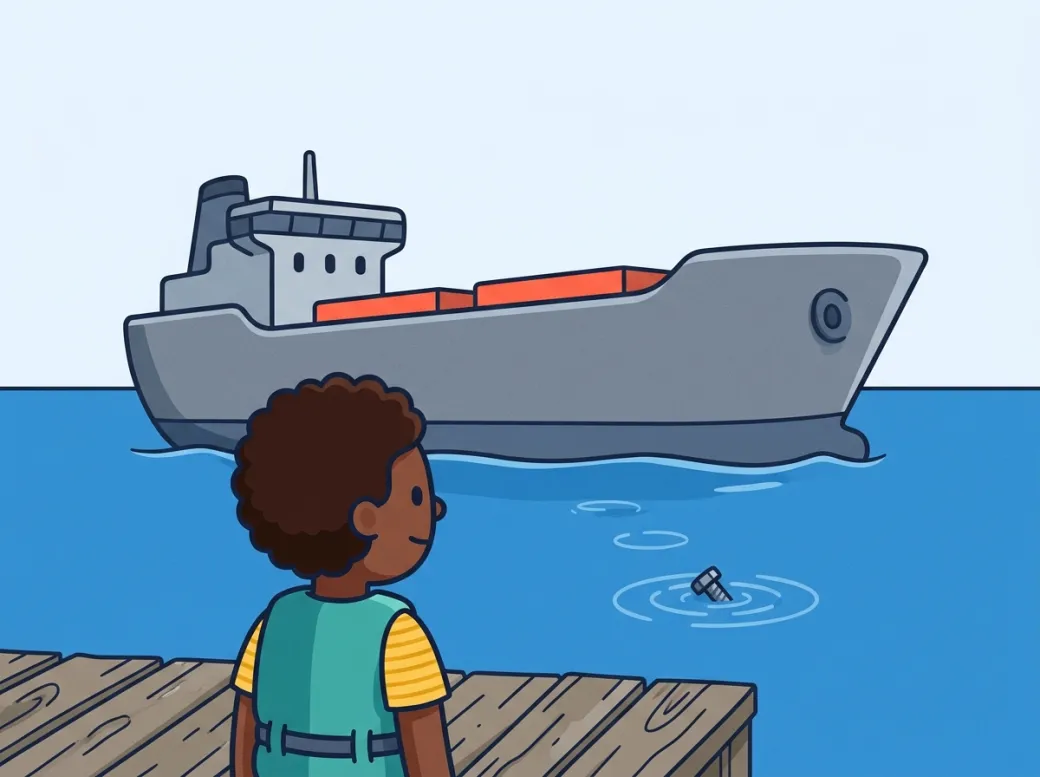
Let water enter the same boat 🚢