
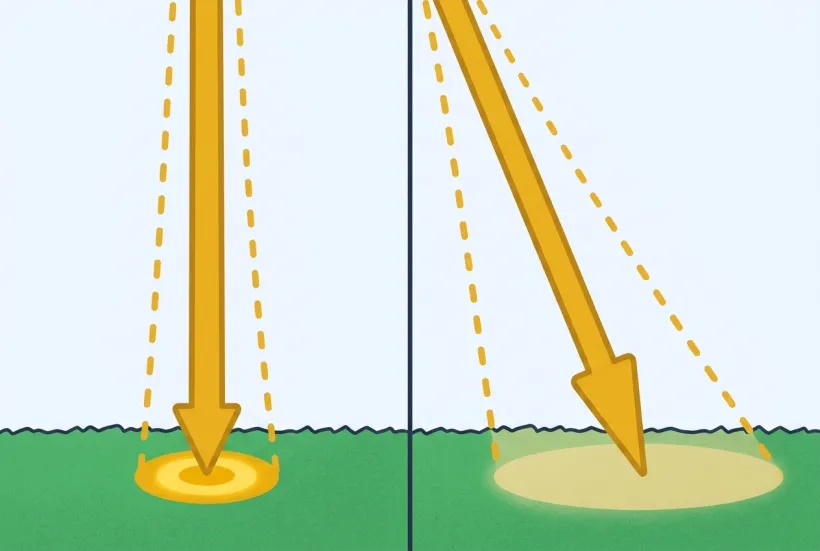
One clue first. The same beam of sunlight can be strong or weak. Straight down, it packs into a tight, bright bullseye. Slanted, it smears across a wide patch — so every spot gets a thinner, weaker share.
Your turn. Here's Earth with the sun off to the left. Drag the lean and watch the sunbeam hit our north half — steep and strong, or slanted and weak.
Same sun — the lean just changes how the light lands.
Here's the trick. Earth leans a little — and its lean always points the same way, at one far-off star. It never swings around to follow the sun. Keep that in mind.
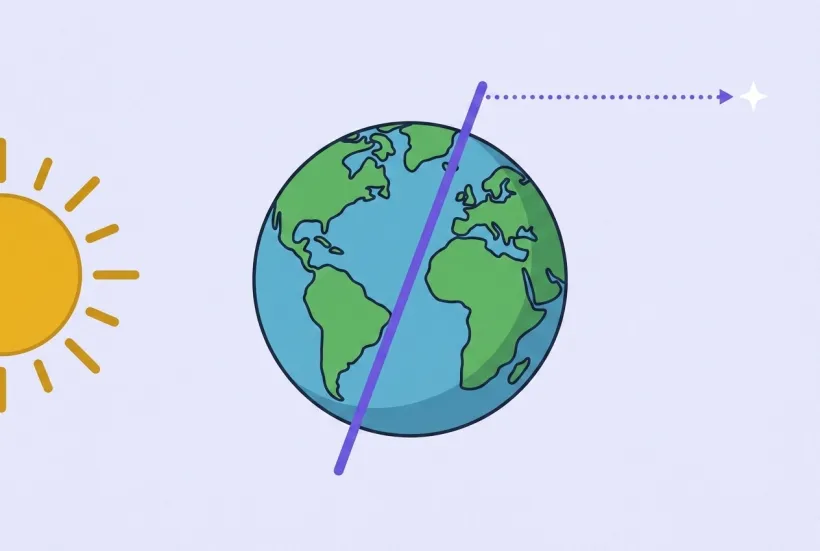
Look down on the orbit. The arrow shows the sideways part of the northward lean. Slide from June to March: that arrow never turns.
Most of the northward axis points out of this map toward you.
So there are two ways the sun can hit your half.
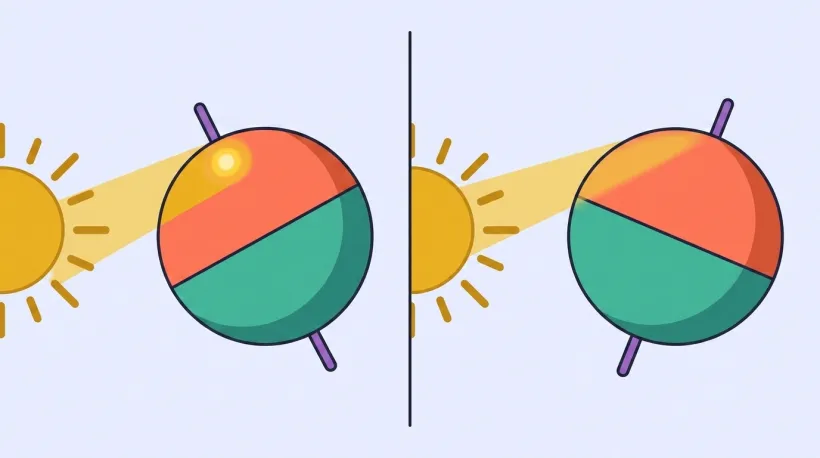
Leaning toward the sun: steep light, a hot bullseye. Leaning away: slanted light, a weak smear. Now use those clues at the new March stop. 🤔
You followed the same fixed lean from June toward the March stop.
At March, which half of Earth gets stronger sunlight?
Walk Earth from June to March 🌍