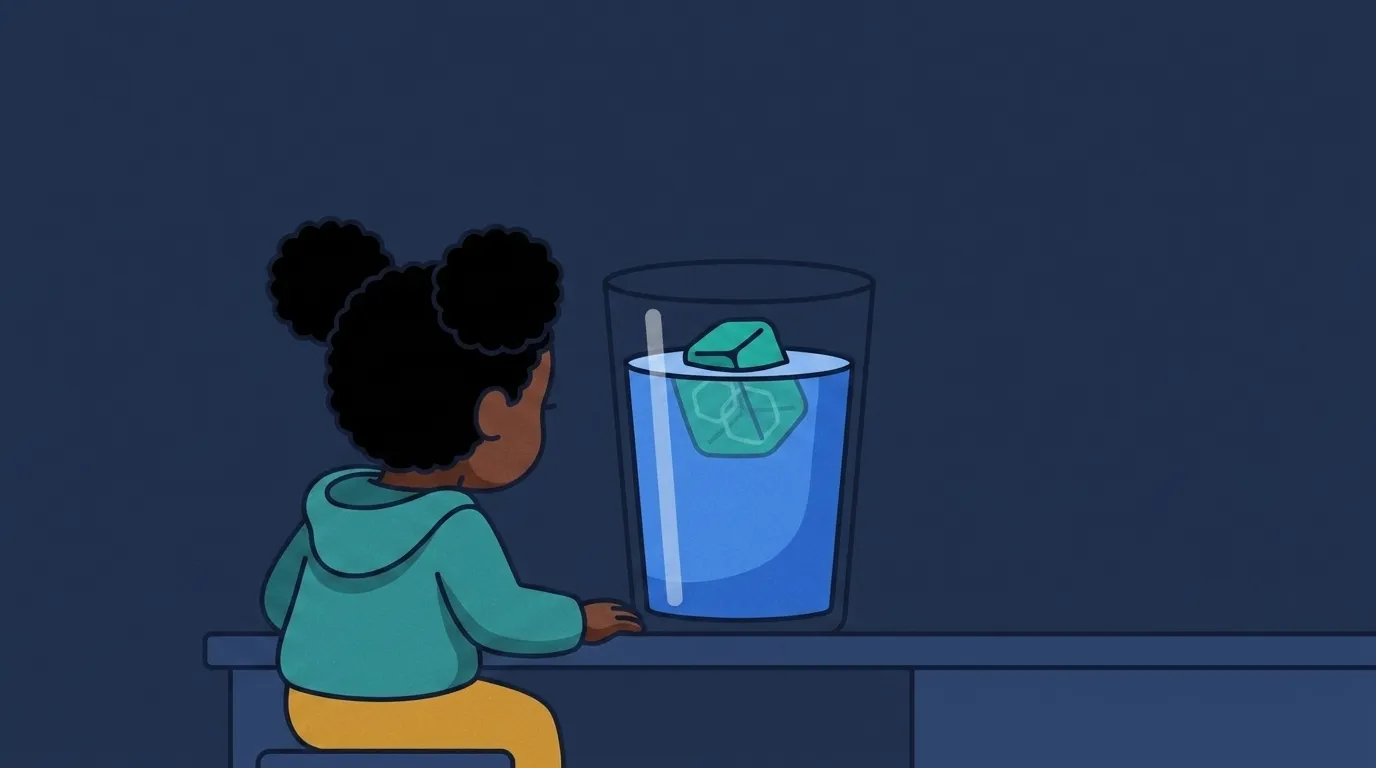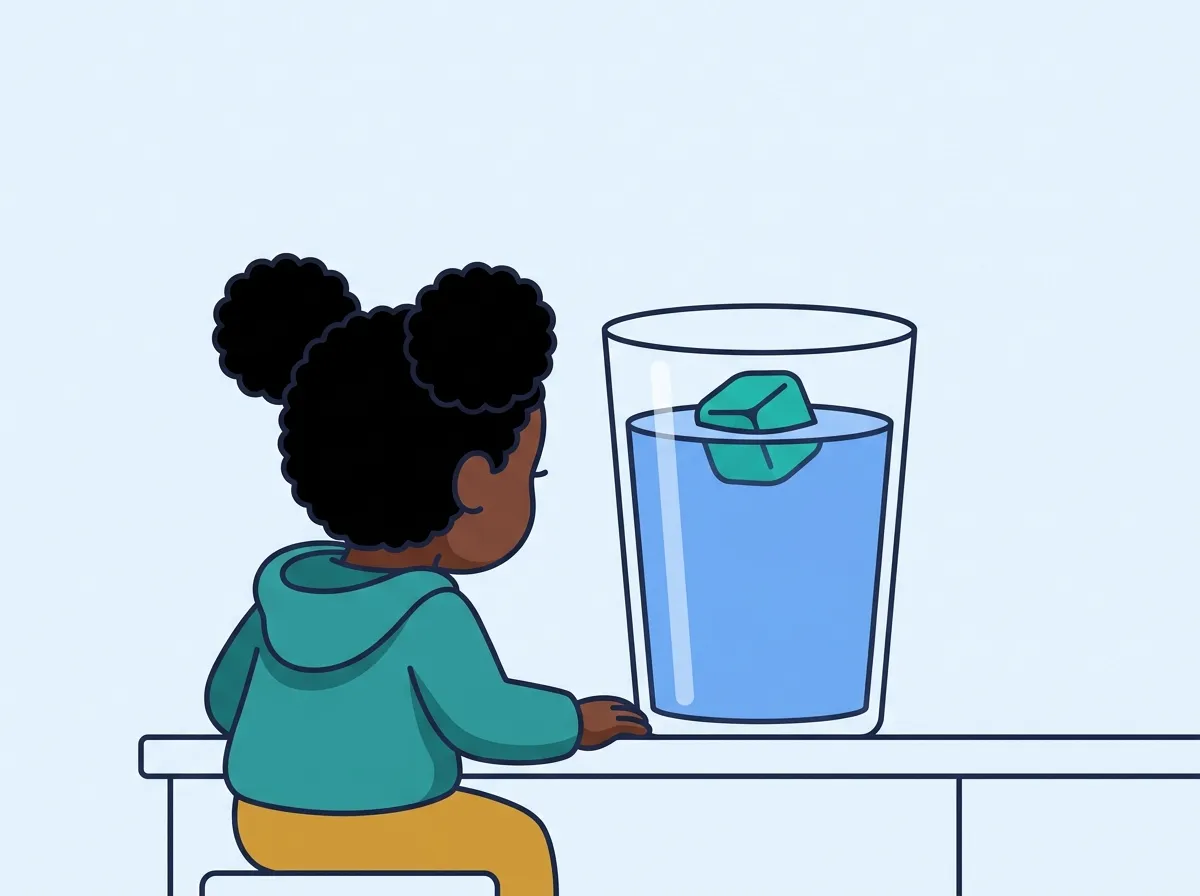
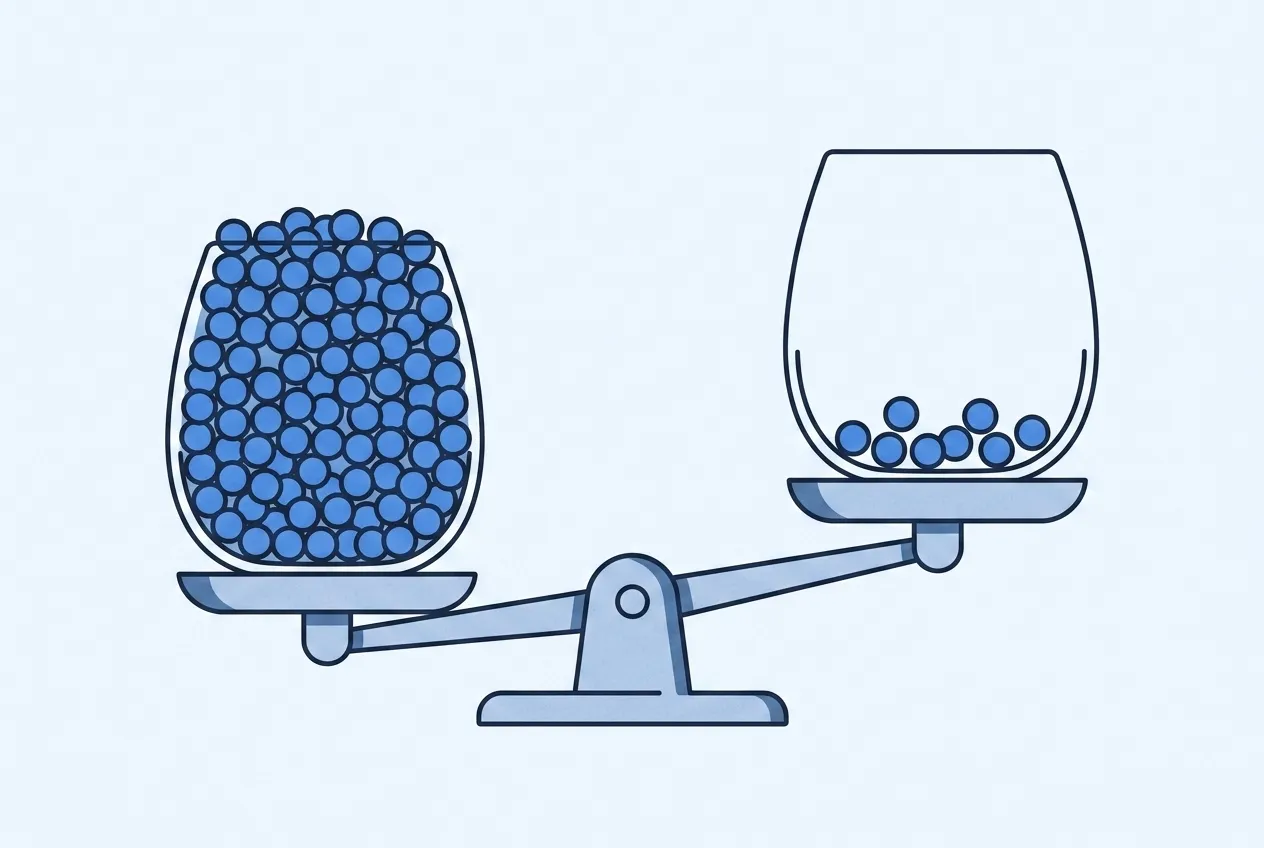
Floating is really a weigh-off. Put two same-size cups on a scale — the lighter one always rides up on top. So the sneaky question is: which cup holds less?
Water bits are tiny V-shapes with sticky corners. Warm bits jiggle too hard for the corners to hold on, so they tumble in a loose huddle. Tap to calm them: the sticky corners finally grab, and the bits lock hands into a stiff, roomy ring.
Same cup, two ways to pack. Jiggly bits don't hold a pattern — they squeeze into a tight huddle, so a LOT crowd in. Frozen corners grip corner-to-corner, and that grip only fits one way: stiff open rings with holes — far FEWER fit.
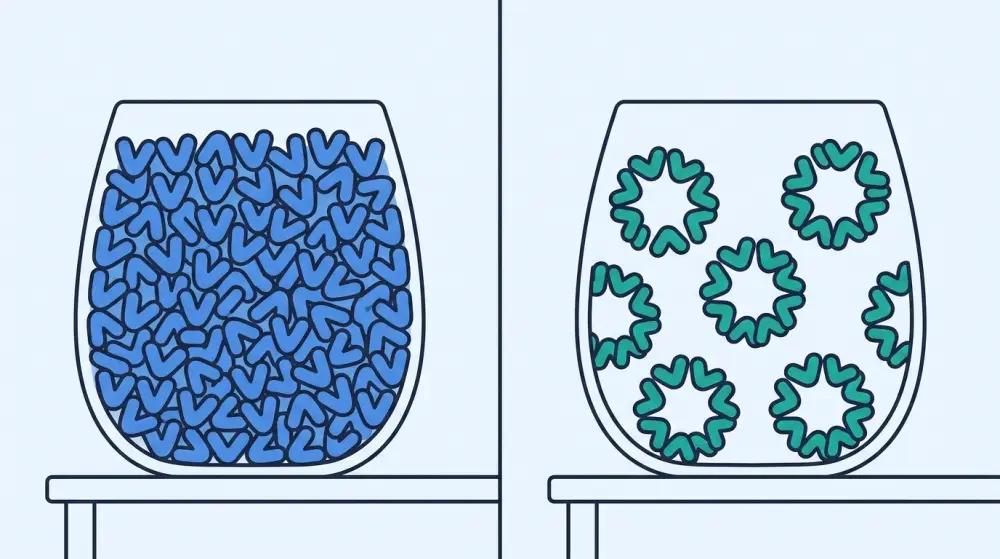
Compare separate water and ice samples filled to the same line.
Same final volume; these are separate samples, not one sample freezing.
Now the real test.
A new test: start with 240 grams of liquid water in each identical roomy container. Freeze only the left one, without spilling or losing water. The ice has room to expand. Which side will rise now?
This time we keep the starting amount of water, rather than filling to the same final line.
Two equal 240-gram samples. Freeze one without losing any water. Release the balance: what happens?
Let go of the scale and watch ⚖️