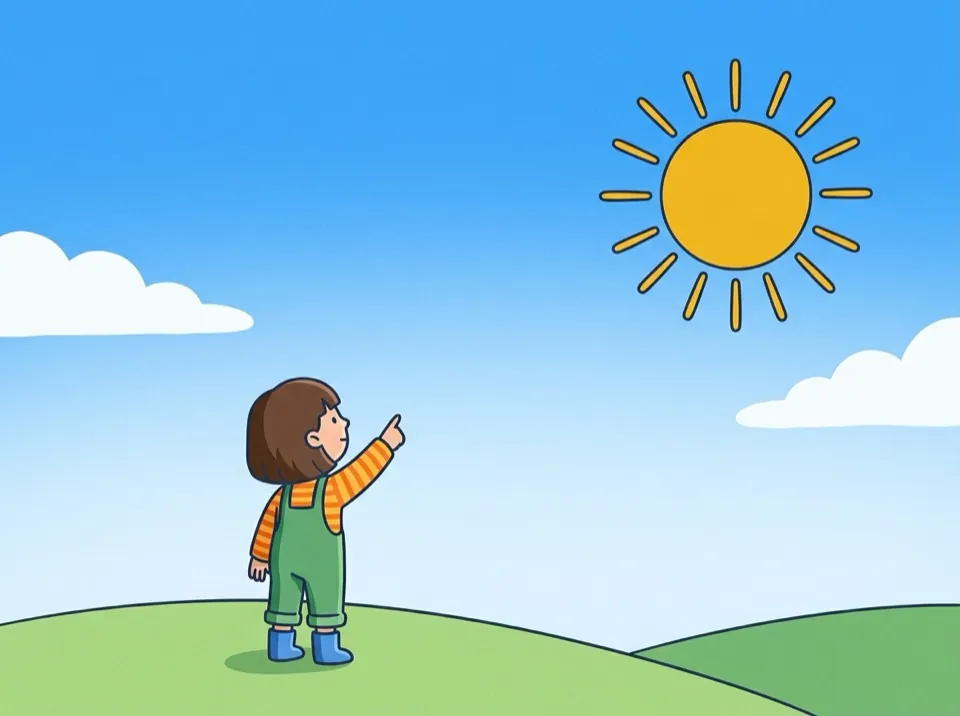
First clue: sunlight only looks white. Tap it and see what's really inside.
Next clue: the air is full of tiny specks. When sunlight hits them, the blue scatters much more strongly than red. More red keeps travelling in its original direction.
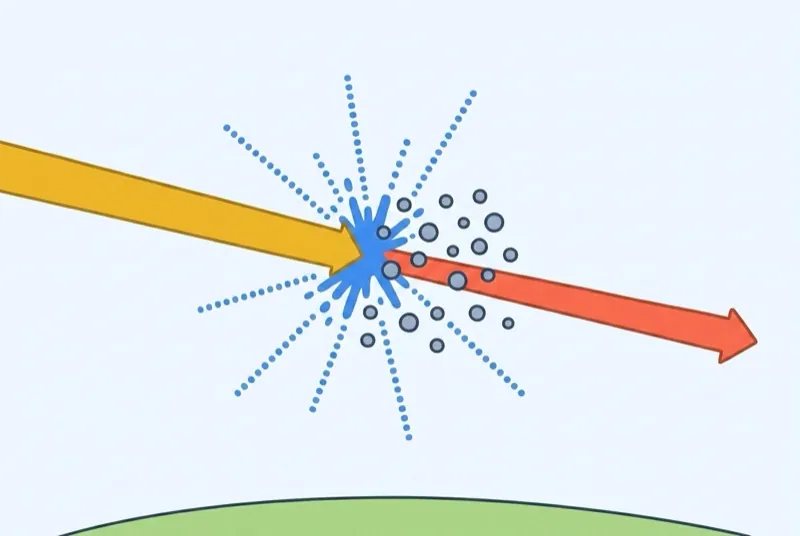
But why blue and not red? Blue light has shorter waves than red. Air molecules scatter those shorter waves more strongly. These big drawn waves help us compare — real air molecules are much smaller than either wave.
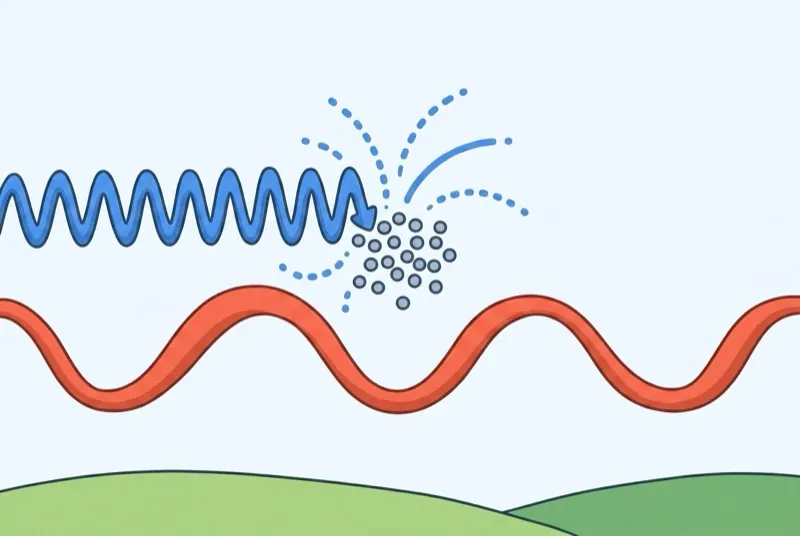
So all that scattered blue, coming at you from every direction — that's your blue sky!
But what if light crosses a LOT of air? Drag the slider and count how many chances the blue gets to bounce away.
More air gives blue more chances to bounce away. The colour that gets out stays hidden — use the clues to predict it.
Look how far the light has to travel.
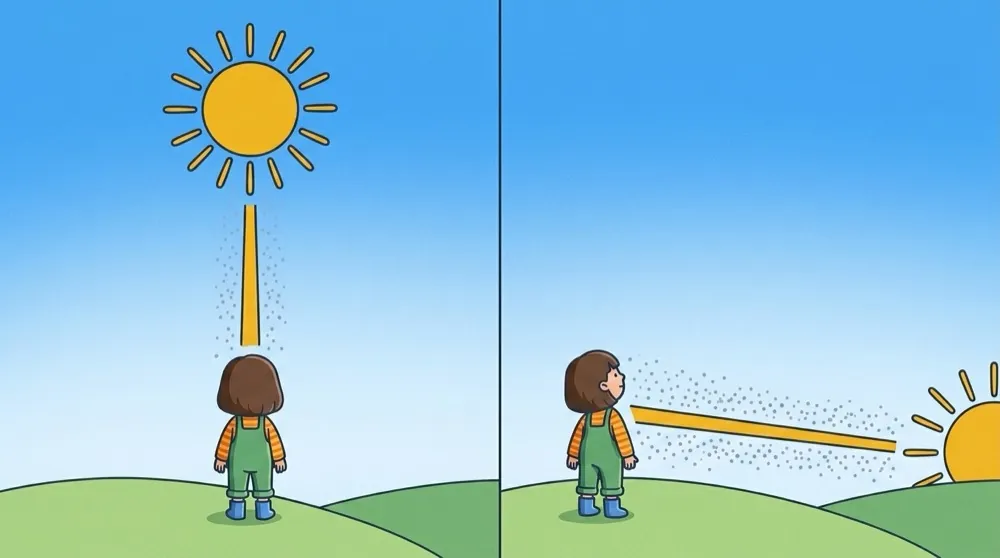
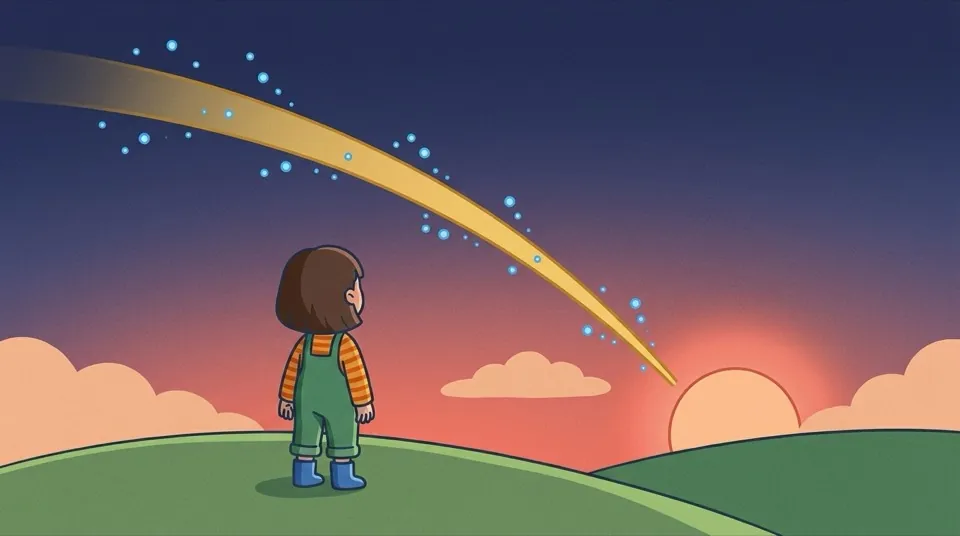
At noon the light takes a short hop through the air. At sunset it has to cross a HUGE amount of air… 🤔
You just saw: thicker air steals the blue.
So when the sun drops low and its light crosses all that extra air — what colour does the sun turn?
Drag the sun down to the horizon 🌅