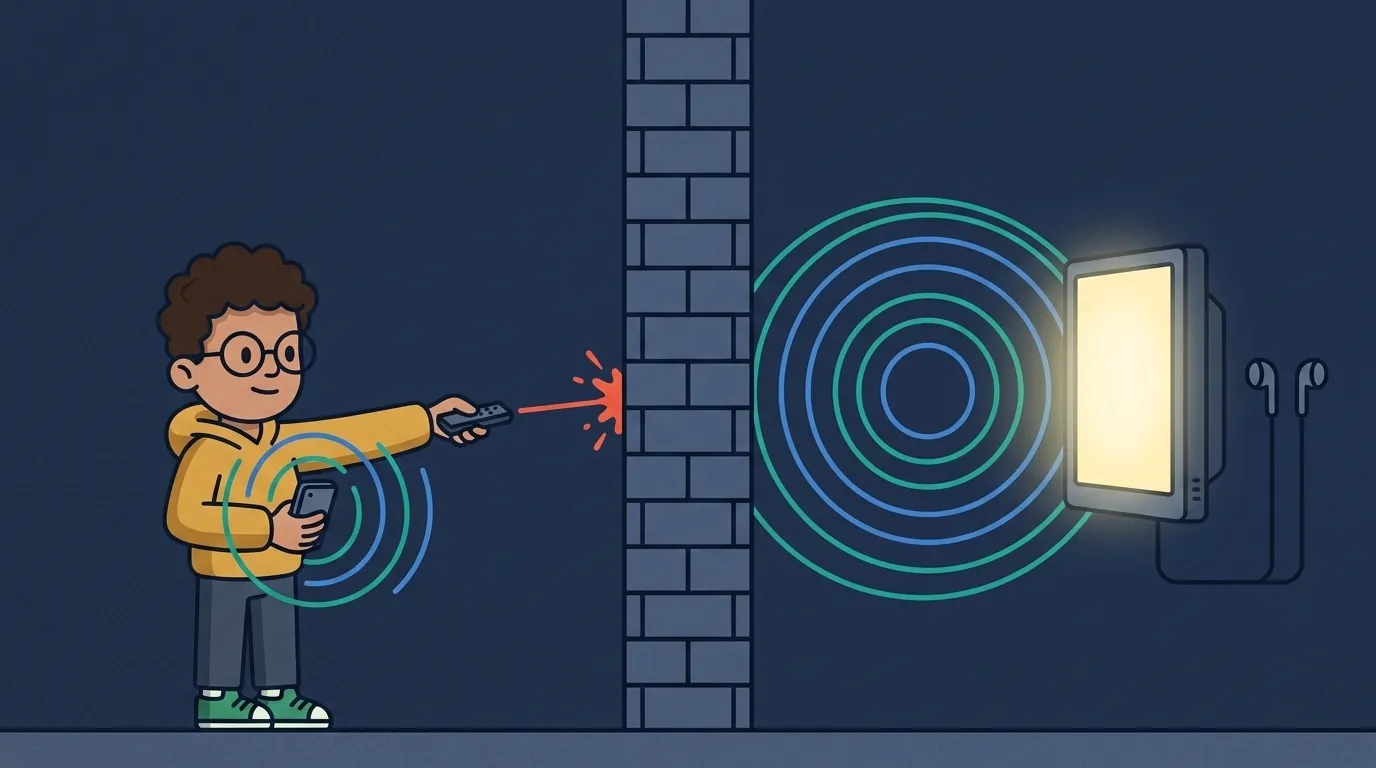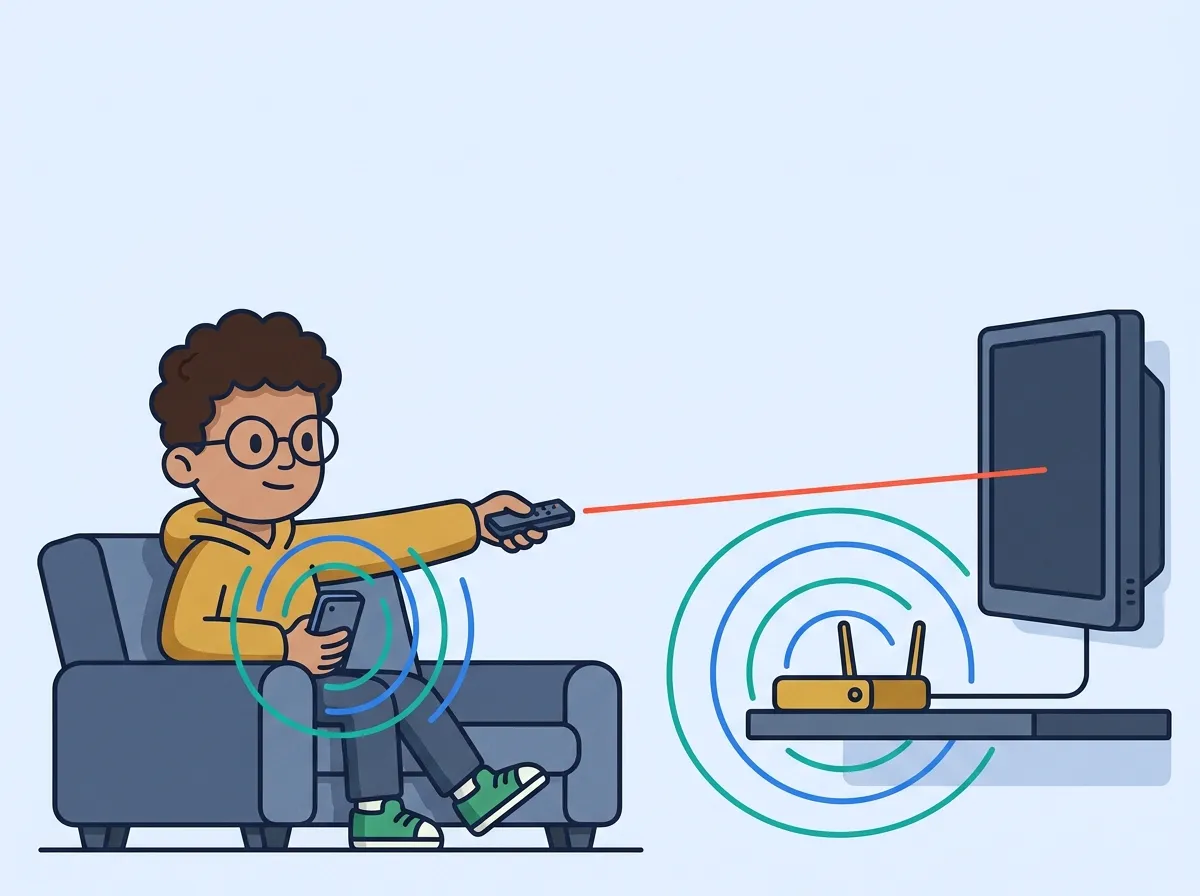
These are all invisible waves. This remote sends a narrow infrared beam. The radio antennas here spread longer waves broadly. The transmitter shapes where each signal goes.
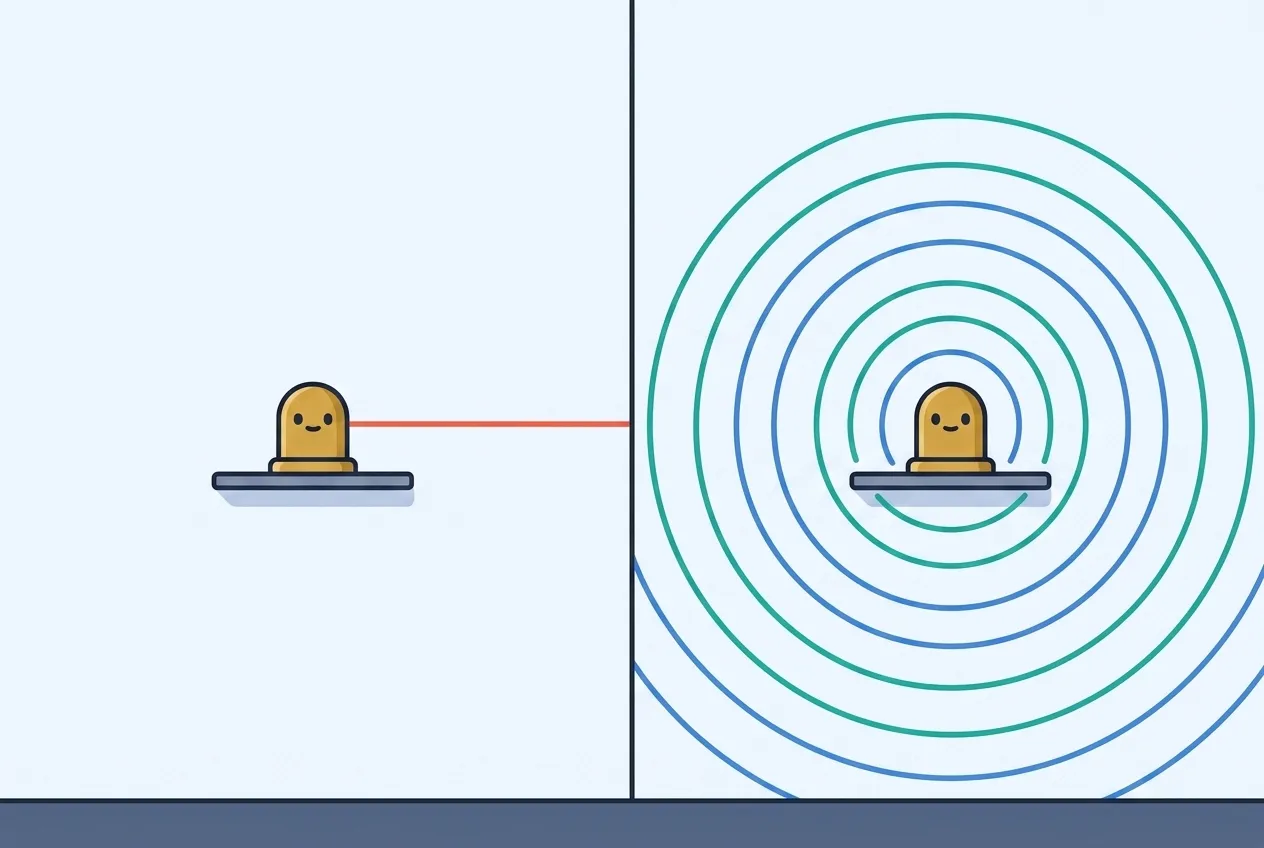
Infrared is invisible light. Tap this remote: it sends a narrow beam toward the TV, like a flashlight. Aiming helps its receiver catch the beam.
WiFi and Bluetooth use radio. These antennas spread waves broadly, so nearby gadgets can receive without being lined up with a narrow beam.
Tap SEND and follow all three signals. In this setup, WiFi reaches farther and Bluetooth serves nearby earbuds. Other devices can have different ranges.
Try one sample wall.
Our made-up signal model: this wall blocks infrared and halves radio. WiFi and Bluetooth are radio. Real walls and devices vary.
Two identical walls. Each gadget needs at least 5 signal units.
WiFi sends 40, Bluetooth 12, infrared 60. Which still has enough after both walls?
Send through one wall, then the next.