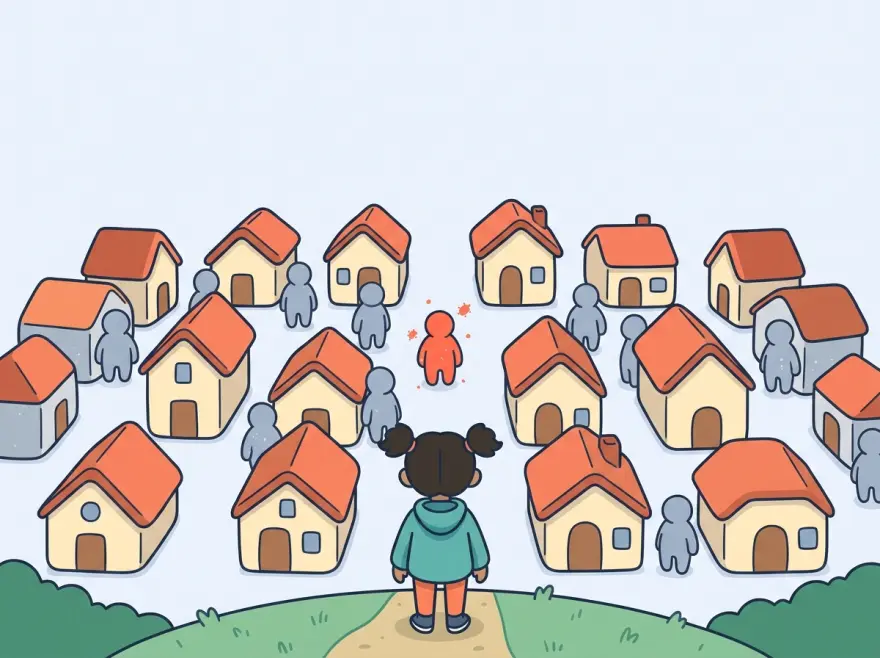
Why does your body remember a germ it already beat?
Did this make sense?
Your thumbs help us make it clearer.
Thanks! That helps us make it clearer.
After you watchWhy does your body remember a germ it already beat?
The short answer
After recognizing an antigen, the adaptive immune system can keep memory cells that help it respond faster on later exposure. Vaccines build this preparation before exposure to the target disease. They reduce the risk of illness or severe disease, but protection is not a guarantee against every infection.
Try this next
- What changes when the remembered target matches? After the first result, turn on round-target memory. Predict the response timing, run again, and compare the two traces.
- What stayed the same across the comparison? Check the incoming germ, growth rule and top model. Only the bottom model’s remembered target changes.
Now you — bend it
- What if What if two targets shared some features?Our toy has no partial match. Sketch what a richer recognition model would need.
Can you prove it?Matching memory changes response delay in this model. — After the first run, change only the remembered target and compare the tick at which the response begins.
Design your own test:Which trace will change when the remembered target is switched?
Explain it to a 6-year-old: Vaccines help your body prepare to recognize particular germs.
The whole story
How it works
Immune cells with receptors that recognize parts of a pathogen can multiply and form memory. Vaccines supply antigens or instructions that let the immune system prepare. Later responses may be faster and stronger. The key-and-lock drawing is a simplified model of recognition, not one literal key per germ.
What people get wrong
Immune memory is specific to recognized targets. Practice against one target does not provide the same protection against every germ. Real targets can overlap, while this toy uses two completely separate shapes.
The catch
Building memory still takes one slow search the first time, which is why protection from a vaccine takes a little while to build and sometimes needs a second shot to make the strongest memory. And memory is not permanent: the ready supply of matching defenders can slowly shrink over years, and some germs change their shape into a new disguise, which is why some vaccines need booster doses and why the flu shot is remade each year for the germ's newest shape.
Questions kids ask
What does a vaccine use for practice?
Vaccines use different approaches, including inactivated germs, weakened germs, selected pieces, or instructions for making a target piece. They are designed to build protection with much lower risk than the disease. Which vaccine is appropriate depends on the person and the vaccine.
Does a familiar germ always cause a milder illness?
No. Immune memory can help, but protection varies with the pathogen, time, changes in the germ and the person’s health. The model shows a possible head start, not a guaranteed outcome.
Why do some vaccines need a booster or a new shot every year?
The memory your body keeps can slowly fade over years, so a booster tops it back up. Some germs, like the flu virus, also change their surface shape into a new disguise, so a fresh vaccine is made each year to match the germ's newest shape.
If memory cells are so good, why do we ever get sick from a new germ?
Memory responses depend on what the immune system has recognized and how well that memory still matches. Both new and familiar germs can cause illness; memory can lower the risk or severity.
Talk about it
- How could practice change the response in this model?
- What does the key drawing stand for?
- Why might protection need time or more than one dose to develop?
For grown-ups
Vaccines expose the immune system to antigens or instructions for making an antigen, helping build a later response. B and T cell recognition and immune memory are much richer than a single key-and-lock picture. This model assigns arbitrary response delays and load curves to completely nonoverlapping targets; it is not a disease-risk calculator.
Keep going
What else makes you wonder?
- If your body keeps millions of differently shaped defenders ready, where does it store them all and how does it have a match for a germ it has never met?
- How does a brand-new germ that no one has ever seen first get discovered and named by scientists?
- Could two people meet the same germ and have it feel totally different for each of them?