Which presses each patch of mud harder: a lighter cart on skinny wheels, or a heavier cart on wide tires?
Did this make sense?
Your thumbs help us make it clearer.
Thanks! That helps us make it clearer.
See it another way
Astrolympics: Pressure
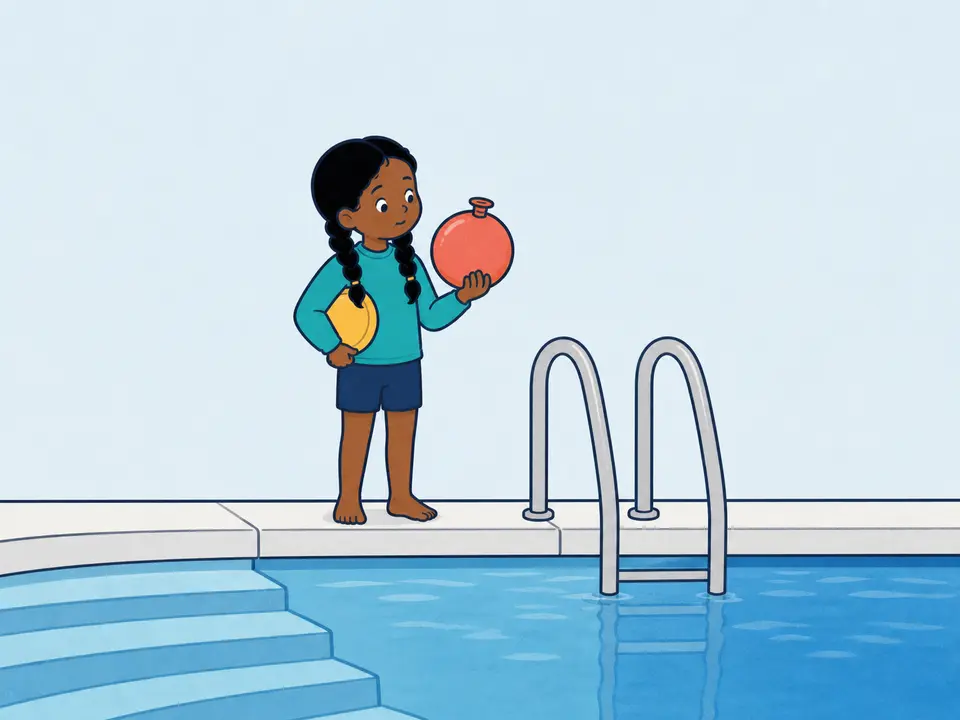
See boots sink while snowshoes spread the same weight over more area, then connect force per area to other sports and space.
Requires internet. You’re leaving Clickory in a new tab; YouTube may show ads or recommendations.
Keep going
What else makes you wonder?
How much extra cargo could the wide cart take before it starts pressing harder?
Keep the same footprint and increase the cargo. Compare the share of the force on each patch before you test.
What would the same two carts do on a hard playground?
They would still push on it exactly the same way — but hard ground may simply refuse to dent for either of them.
What happens when a soft tire squishes flat under the load?
A squishy tire touches more ground than a hard one — so the footprint you start with is not the footprint you end up with.
More to explore
After you watchWhich presses each patch of mud harder: a lighter cart on skinny wheels, or a heavier cart on wide tires?
The short answer
How hard each patch of ground is pressed depends on both the total downward force and the actual contact area. Equal footprint pads let us compare the share carried by each patch. A heavier cart can have less pressure if its contact area increases enough.
Try this next
- What if the wide cart carried even more? Keep one footprint fixed and add push tokens. Predict when its per-pad share will exceed another cart’s, then distribute the tokens to check.
- What if the skinny cart had a much smaller load? Keep one footprint fixed and reduce the load. Predict how each pad’s share changes before distributing the tokens.
- What if the ground were firmer, like packed dirt instead of soft sand? Press a coin flat on sand, then on its edge, on a beach or sandbox. Predict which one pokes in deeper, then try the same on hard pavement and see if the footprint still matters.
The whole story
How it works
A load creates total downward force; the tire footprint supplies contact area. Pressure is force divided by area. Sharing a fixed number of push tokens among equal ground pads makes that ratio visible. Compare both quantities before predicting a new cart case.
What people get wrong
Weight alone does not determine how strongly each patch of soft ground is loaded, and width alone does not guarantee that every tire will stay on top. Both total force and actual contact area matter, along with soil, tire pressure, tread, motion, and load distribution.
The catch
A larger contact patch can lower pressure on soft ground, but real tires deform and their footprint depends on inflation pressure and load. Wider tires can also change drag, steering, traction, mass, cost, and road behavior, so the useful choice depends on the job and surface.
Questions kids ask
If a tractor tire is much heavier, why doesn't it sink more than a bike tire?
It depends on their loads, footprints, and the soil. A larger actual contact area can spread a heavier load enough to reduce average pressure. Width alone does not decide the result, so compare force with contact area.
Why do snowshoes stop you from sinking into snow?
Snowshoes work exactly like wide tires. Your weight stays the same, but the big flat shoe spreads it over a much larger area of snow. That lowers the pressure on the snow below what makes it cave in, so you stay on top instead of punching through.
Why does a high heel sink into grass when a flat shoe doesn't?
A high heel presses your weight onto a tiny point, so the pressure there is huge and it pokes into soft ground. A flat shoe spreads the same weight over its whole sole, so the pressure is low and it stays on the surface. Same person, same weight, different footprint.
Does spreading the weight make the object lighter?
No. The weight stays exactly the same. Spreading it over a wider footprint only changes the pressure, which is weight divided by area. The ground still feels the full weight, just shared gently across more of itself instead of jammed into one small spot.
Talk about it
- Guess first: who would sink deeper in snow, you in your boots or a much heavier deer on its thin hooves? Why?
- Why do you think a thumbtack goes into a wall so easily when your flat fingertip can't, even though it's the same push?
- If we wanted to walk across really soft mud without sinking, what could we put on our feet — and why would it help?
For grown-ups
Pressure is force per unit area, P = F/A. The equal-pad token model preserves the ratio direction but is not a tire-pressure calculator or a universal bearing-capacity threshold. Real contact stress is nonuniform, tires are flexible, and soft-ground response depends on soil mechanics, tread, slip, speed, and repeated loading.